
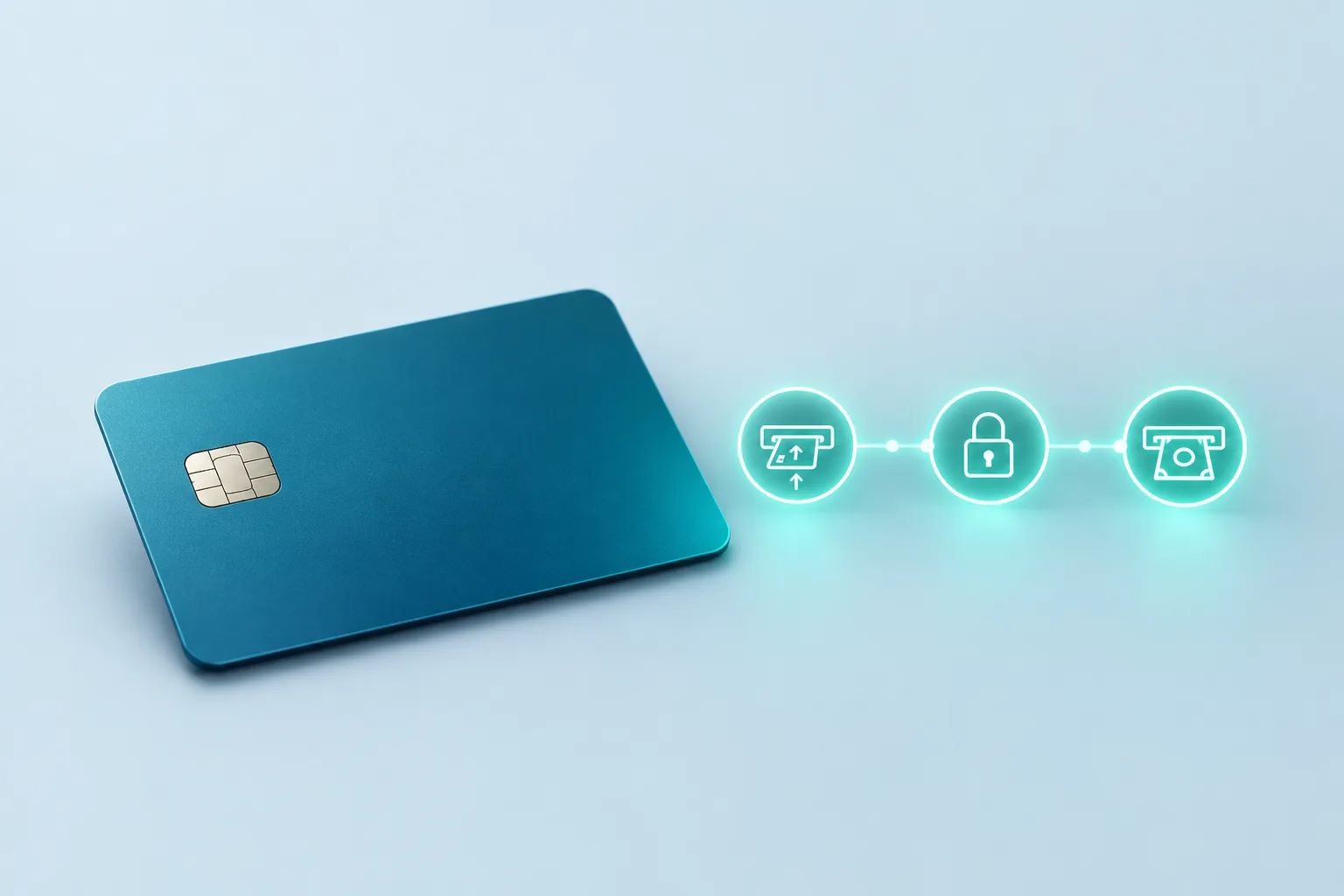
What an ATM is and what the acronym means
An automated teller machine is an electronic banking terminal that lets customers carry out selected transactions without speaking to a bank teller. An ATM can make it possible to withdraw cash, check an account balance, or complete other basic banking tasks outside a branch, depending on its features.
The acronym ATM is also used in other contexts, so the surrounding details matter. Here, it means the banking machine: a physical terminal that communicates with financial networks to process a customer’s request. It isn’t a bank account, and it doesn’t replace every service a bank provides.
Machines may be owned or operated by a bank, or run by an independent provider. Bank-owned machines may have different fee arrangements and services from independent ones, which can charge a separate operator fee. The cardholder’s bank may also charge its own fee, so the cost shown at the machine may not be the whole cost.
Available transactions, withdrawal limits, fees and service arrangements depend on the machine, its operator and the cardholder’s bank. Before using an ATM, check which services it offers and read any fee notice before confirming. A familiar-looking machine doesn’t necessarily follow the same rules as one operated by your bank.
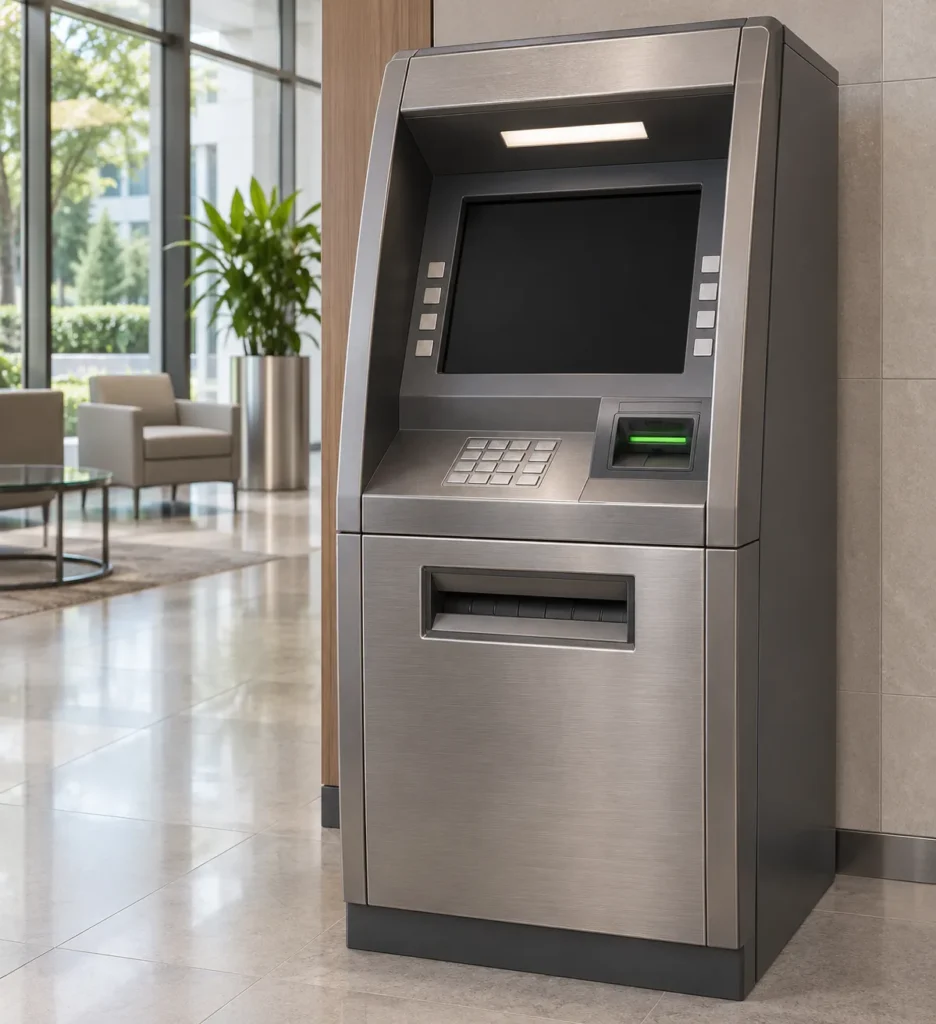
How an ATM transaction works, step by step
A typical withdrawal follows a simple sequence, although the wording on screen varies. You insert or tap a card, choose a language if asked, enter your PIN, select a transaction and amount, then review any fee before confirming or cancelling.
- Present your card or contactless credential. This identifies the account or payment credentials the machine should use.
- Enter your PIN. The PIN helps authenticate the cardholder. Cover the keypad as you type.
- Choose what you want to do. Select a withdrawal or another available service and enter any requested details.
- Review the terms. Check the amount and any fee displayed. Cancel if something is unclear or you don’t accept the charge.
- Take your card, cash and receipt. Some machines return the card before dispensing cash; others follow a different order.
Behind the screen, the machine sends a request through its operator and a payment network to the cardholder’s bank. The bank checks whether the card and PIN are valid, whether the account can cover the request and whether applicable limits allow it, then approves or declines the transaction. The network carries that response back to the machine.
An approval doesn’t guarantee that cash will reach you. The machine may have run out of notes, have a fault, or fail while dispensing. If the cash delivered doesn’t match what the screen showed, keep the receipt if available and record the time, location and machine identifier. Check your account and contact your bank and the operator to report the mismatch. Keep those details whenever an ATM transaction doesn’t finish as expected; a clear record makes it easier to explain what happened.
What you can do at an ATM
Cash withdrawals are the service most people expect, but a machine may offer more. Depending on the bank and location, customers can also make deposits, check balances or transfer money between eligible accounts. The menu is not identical everywhere, so don’t assume a service available at one machine will appear at another.
Some machines support PIN changes or prepaid mobile top-ups. Deposits may accept cash, checks or both, but availability and processing rules vary. A deposit may be subject to limits or account-specific conditions, and a check deposit may not be available for use immediately. Read the on-screen terms before treating deposited funds as spendable.
Transfers deserve a careful check because account names and labels can differ between machines. Before confirming, make sure you’ve selected the intended source and destination accounts and entered the correct amount. If a deposit screen asks you to confirm the amount, compare it with what you inserted or what the machine says it has counted.
So, what is ATM in bank? It is a self-service banking machine connected to account and payment networks, not a separate kind of bank account. The ATM provides access to selected services using a card or other supported credentials, while the account itself remains with the bank. If a desired option is missing, check with your bank or try a machine it recommends rather than assuming your account cannot use the service.
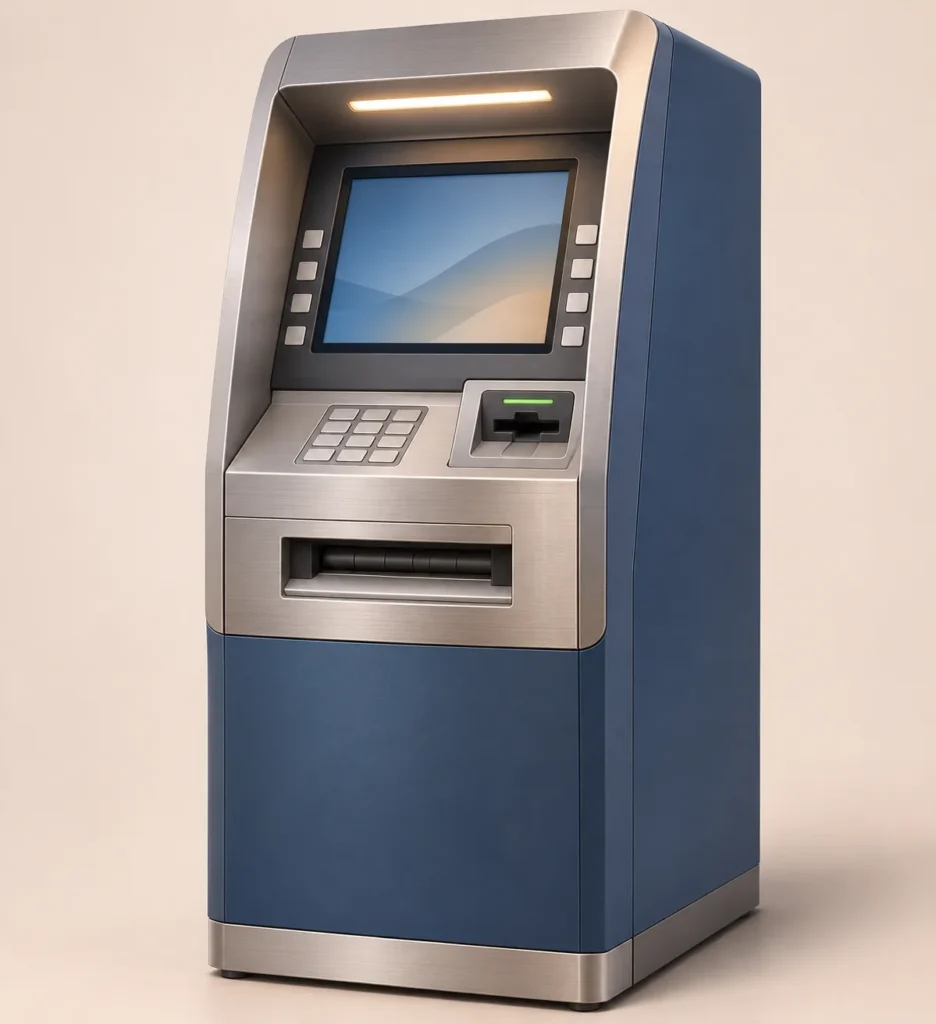
ATM withdrawal limits, fees, and exchange rates
The amount you can take out is shaped by more than one limit. Your bank may set a daily withdrawal limit, the operator may set a maximum for each transaction, and the machine can dispense only the cash it has available. A request can therefore be declined even when your account has enough money.
Can you withdraw $2,000 at an ATM? Possibly, if your bank’s daily limit, the machine’s per-transaction limit and its available cash all permit it. You may need to make multiple withdrawals, if the machine and your bank allow them, or use a bank-assisted option. Check your account’s limits before travelling if you need a particular amount.
Can you withdraw ₹15,000 at once? It depends on your card’s limits, the machine’s withdrawal cap and its cash supply. Check the bank’s rules and the options displayed before proceeding. If the amount exceeds the single-transaction cap, a smaller withdrawal may be possible, but repeated transactions could have separate fees or count towards a daily limit.
Charges can come from both the ATM operator and your own bank. The machine should display an operator fee before you accept the transaction; your bank’s fee may be set out separately in your account terms. If the notice is unclear or you don’t accept the charge, cancel rather than guessing.
When withdrawing foreign currency, distinguish the exchange rate from transaction fees. A machine may offer to convert the withdrawal into your home currency. That conversion can differ from the rate applied by your card network or bank, and accepting it doesn’t necessarily remove other fees. Compare the choices shown and check your bank’s terms when you can.
- Use your bank’s machine locator to find recommended or fee-free options.
- Review your account’s withdrawal limits and fee policy before you need cash.
- Read the displayed fee and currency choice before confirming.
- Cancel if the terms aren’t clear or don’t suit you.
These checks help you avoid surprises, but the final terms depend on the card, bank and operator. An ATM that appears convenient can still be a costly choice if its fee or conversion terms don’t suit you.
ATM safety: protect your card, PIN, and cash
Choose a machine in a well-lit, visible place where you can take a moment to check your surroundings. Before inserting a card, look at the card slot and keypad. If a part seems loose, unusual or added on, don’t use the machine; report it to the operator or venue and find another one.
Cover the keypad with your free hand while entering your PIN, even if nobody seems close. Don’t accept help from strangers who approach during a transaction, and keep your card and cash secure before leaving. These habits reduce the chance that someone nearby can see your PIN or take advantage of a moment of distraction.
Card skimming is the unauthorized capture of card data, often using a device placed at or near the card reader. Cash trapping involves a device that holds the notes after the machine appears to dispense them, making it seem as though no cash arrived. If cash doesn’t appear, don’t immediately retry: the first transaction may still have been processed.
If the machine retains your card or the cash amount is wrong, note the time, location, machine identifier and transaction details. Keep the receipt if you have one. Contact your card issuer through its official phone number or banking app; if the card was retained, ask what to do and freeze or block it if appropriate. Notify the machine operator as well.
For missing or incorrect cash, report the problem promptly to both your bank and the operator, then monitor your account for unfamiliar activity. Don’t rely on an on-screen message alone as proof that a transaction was reversed. A record of what happened gives the bank and operator useful details to investigate. If anything about an ATM looks tampered with or behaves unexpectedly, step away and use a different machine.
Why a bar or other business might have an ATM
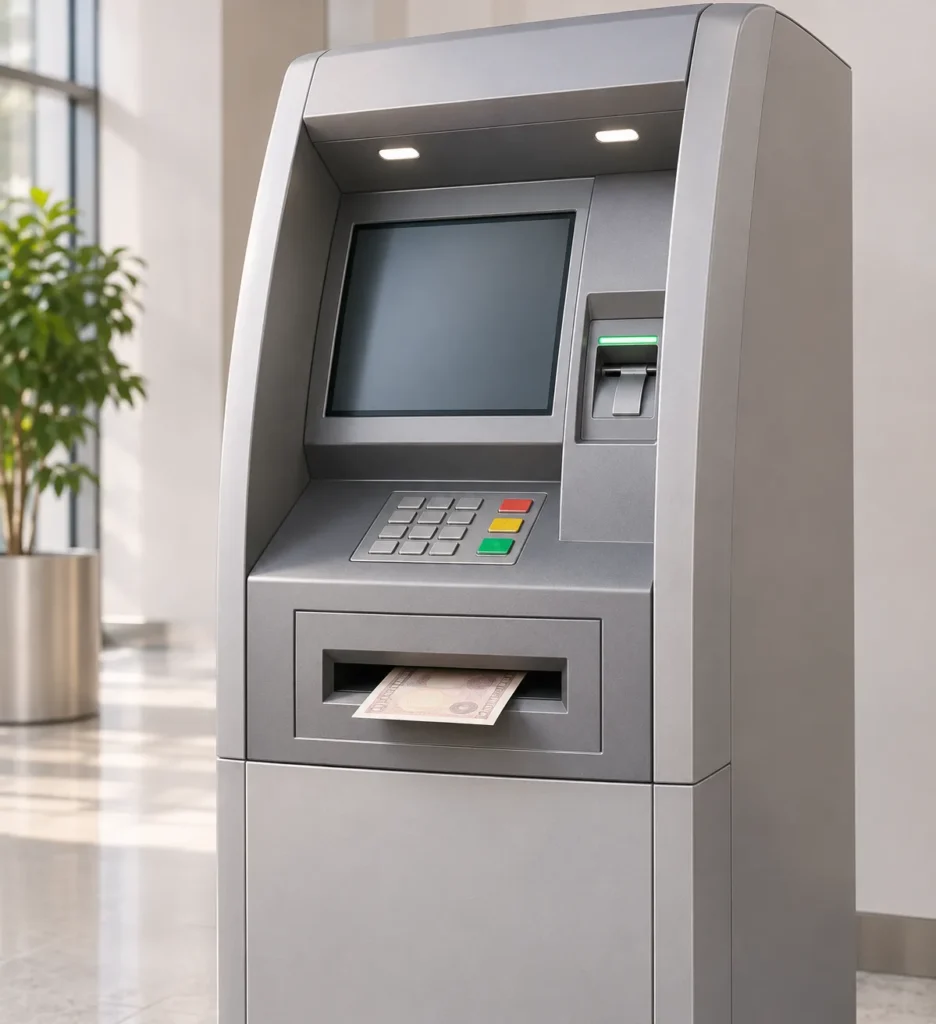
A cash machine can give customers access to money inside a venue instead of requiring them to leave and find a bank. A bar customer might want cash to pay a tab or leave a tip; a convenience-store shopper may need cash for a purchase. Event venues can also consider whether on-site access fits how their visitors pay. Those are possible conveniences, not a guarantee of increased sales.
Depending on the agreement, a business may receive compensation from the operator or a share of transaction fees. There is no fixed monthly income for ATM owners. Results depend on transaction volume, fee arrangements, location, operating costs, who replenishes cash and what the contract with the machine provider says. A busy-looking venue may still see less use than expected if customers prefer cards or digital payments.
Before installing a machine, work through the practical questions:
- Estimate likely demand. Consider when customers need cash and whether nearby machines already serve them.
- Compare written terms. Ask how compensation and fees are calculated, and what the contract requires.
- Assign responsibilities. Confirm who loads cash, handles repairs, monitors service and responds to complaints.
- Check the site requirements. Assess floor space, security, accessibility and applicable local rules.
The trade-offs are real. A machine takes up space and can bring maintenance work, cash-management responsibilities and security concerns. Customers may complain about fees, especially if the machine’s terms aren’t clear, and usage may not justify the effort. A business should compare the expected customer benefit with its obligations rather than treating installation as guaranteed income. For a bar, it’s also sensible to keep card and digital payment options available; cash access should complement them, not replace them.
When a browser security check appears instead of banking
A browser security check or verification request on a webpage is not an ATM transaction. By itself, it doesn’t mean that a machine has been used or that your bank account has been accessed. A website may ask a visitor to complete a check before showing a page or tool, and the prompt may offer a continue button or ask for a page refresh if the check doesn’t load.
Google is one example of a service whose pages or tools may display browser checks, but not every verification prompt comes from Google. The appearance of a prompt alone doesn’t establish who sent it. Check that you reached the service through a source you trust and that the page address is the one you intended to visit.
If a Finnish-language interface appears unexpectedly, it may simply reflect the page’s language setting or your browser preferences. Look for a language selector if you want to change it. Don’t enter banking credentials into an unfamiliar page just to get past a check, and don’t download a file you weren’t expecting.
If the prompt appears while you’re trying to do something banking-related, stop and check the page’s address and source. Open the bank’s official app or call the number on your bank card rather than following an unexpected prompt. This keeps the browser issue separate from the account: a check on a webpage is not proof that an ATM or bank system has processed a transaction.
Choosing and using an ATM with confidence
A reliable routine can prevent avoidable costs and confusion. Before withdrawing, find a machine recommended by your bank, read the fee notice, confirm the amount and currency, shield your PIN and keep a record of the transaction. If the machine presents a choice you don’t understand, cancel and ask your bank rather than accepting it under pressure.
- Choose the machine. Use your bank’s locator or another source you trust, and check that the surroundings feel safe.
- Review the cost. Read the displayed fee and consider any separate charge from your bank.
- Confirm the request. Check the amount, currency and selected account before proceeding.
- Protect your details. Cover the keypad and take your card, cash and receipt when the transaction ends.
- Check the result. Compare the cash with the receipt or screen and review your account if there’s a mismatch.
Business owners should take a similarly deliberate approach before installing a machine. Compare the provider’s written terms, service responsibilities and fee structure, then assess whether customers are likely to use it. Clarify who will replenish cash, arrange repairs and deal with complaints. Check available space, security needs, accessibility and local requirements before signing.
For cardholders, the next step is straightforward: review your bank’s withdrawal limits and fee policy before your next cash withdrawal. For business owners, assess customer demand and the operating obligations before committing to installation. The right ATM is one that meets people’s needs transparently, with clear fees, reliable service and sensible security.
Key Takeaways
- An automated teller machine provides selected self-service banking functions, but its services and rules vary by operator, machine and bank.
- Withdrawal limits may come from both your bank and the machine; fees can also come from both, so check the displayed terms and your account policy.
- Protect your PIN, inspect the machine, and record the details if cash or a card is retained or a transaction amount is wrong.
- A business may benefit from convenient on-site cash access, but potential compensation depends on usage, costs and the provider agreement.
- Before withdrawing or installing a machine, check the terms, security, service responsibilities and likely needs of the people using it.
Frequently Asked Questions
What is ATM in bank?
In banking, an ATM is an automated teller machine: an electronic terminal that lets customers perform selected transactions, such as withdrawing cash or checking a balance. It connects to account and payment networks; it isn’t a separate kind of bank account.
Can I withdraw $2,000 at an ATM?
Possibly, if your bank’s daily limit, the machine’s per-transaction limit and the cash available allow it. You may need multiple withdrawals or a bank-assisted option, and fees or daily limits may apply.
Do ATM fees include the fee charged by my bank?
Not always. The machine may show an operator fee, while your bank may charge a separate fee under your account terms. Check both before confirming the withdrawal.
